11 best things to do in Alicante
Let yourself be captivated by all the things to do in Alicante. Situated on the Mediterranean coast, it’s not only known for its beaches but also for its castle and charming neighborhoods.
In the Valencian Community you should not only visit its capital, Valencia. There are also other very nice and interesting cities and towns.
Having the advantage of not being a very big city, most of the places to see in Alicante in 2 days are within walking distance of each other. Strolling through charming neighborhoods, enjoying the long beaches, contemplating the views from the castle, sailing to an ancient pirate island and many more activities are what you can do in the city.
Where to stay in Alicante
If you want to be within walking distance of the main beaches and attractions, then the city center is the ideal place. If you want a quieter place, San Juan beach area is a good option. Our recommendations for sleeping in Alicante are as follows:
- Hotel Meliá Alicante: right in the city center and 100 meters from Postiguet beach. Modern facilities and spacious rooms to be close to everything.
- Olé Backpackers: ideal for backpackers or young people, it is a hostel in the center with a very good atmosphere, games room and bar.
- Hotel Castilla Alicante: 50 meters from the beach of San Juan, near Alicante, it has excellent facilities including spa and swimming pool. Ideal for couples and families.
Map – Things to do in Alicante
Alicante is a city to dedicate 2 or 3 days to, but if we start to add up what there is to see in the surrounding area, both in the inland towns and those on the Costa Blanca, we would have to talk about at least 1 week.
If you want to visit the main attractions of the historic centre with a guide, we recommend you to book the free tour of Alicante.
On the map we show you the best things to do in Alicante.
1. Castle of Santa Barbara, the fortress that watches overhead
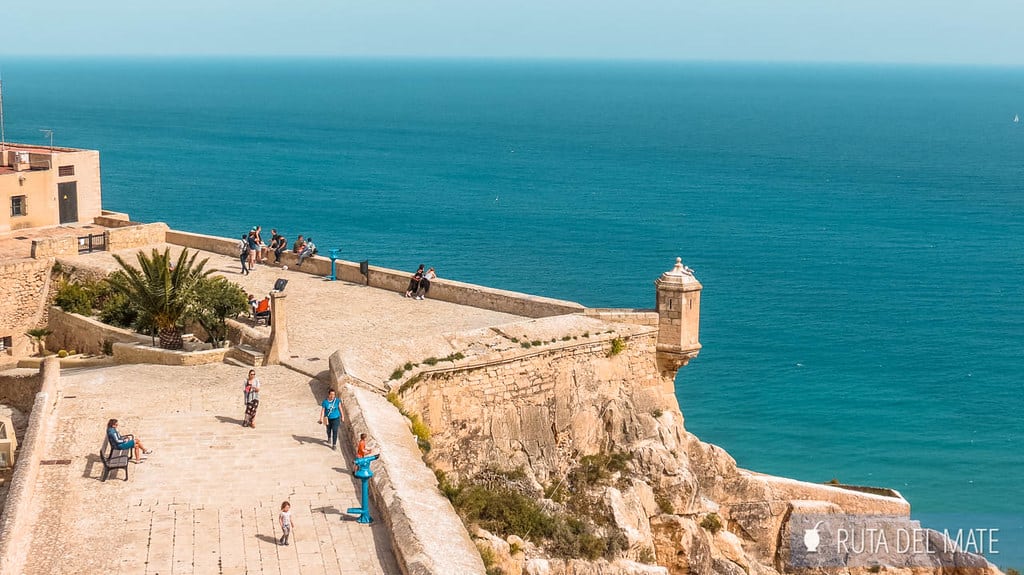
On the Mount Benacantil, located near the city center and by the sea, the castle of Santa Barbara is one of the main places to see in Alicante. This fortress has its origins in the 9th century when the city was dominated by the Arabs. Subsequently, coming into Christian possession after the reconquest, it was abandoned for a time in the early 20th century until finally in the 1960s it was opened for public visitation.
Due to its location, the castle has privileged views of the Mediterranean coast and the port of Alicante. The historical enclosure is divided into three main areas. The highest part is the oldest with remains ranging from the 11th to the 13th centuries; the intermediate area preserves rooms from the 14th century such as the Patio de Armas or the Philip II room; the lowest area is the most recent and dates from the 18th century.
To go up to the castle of Santa Barbara there are several options. The easiest is to take the elevators located on Jovellanos Avenue, which make the journey inside the mountain. The second option is to walk through the beautiful neighborhood of Santa Cruz. For more information, check Santa Barbara castle official website.
📷 Do you want to live a different experience? Book a beer tasting at Santa Barbara Castle, which includes entrance to the fortress.
2. Santa Cruz neighborhood, things to do in Alicante
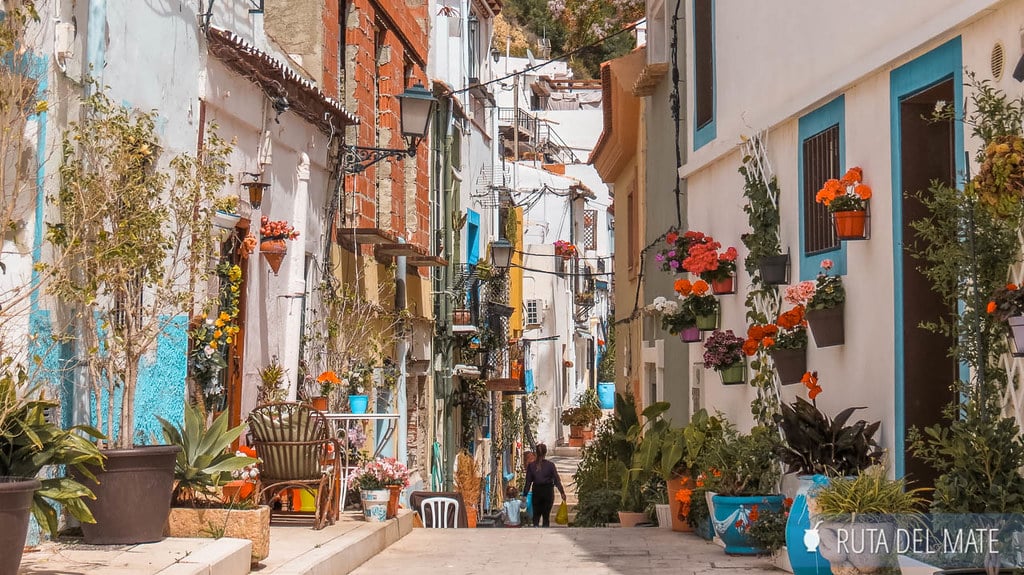
Located on the slopes of Mount Benacantil and as a gateway to the castle, Santa Cruz is the most picturesque and traditional neighborhood of Alicante. Walking through its narrow streets that climb up the hillside you will find low houses painted white and decorated with flowers, which adds a special charming touch.
The neighborhood is home to many artisans, which is why it has a very bohemian style. Among the historical relics of the place is the hermitage of Santa Cruz, originally from the 18th century. From this place starts the famous Procession of Santa Cruz, celebrated on Holy Wednesday, that goes down the streets.
To see the neighborhood full of color and adorned with flowers, the ideal time to visit it is during the Cruces de Mayo (May Crosses). It is a festivity that lasts four consecutive days and creates a special atmosphere in Alicante.
3. Stroll through its historic center
Walking through the historic center is one of the best things to do in Alicante. It is located between the Santa Cruz neighborhood, the port, the Alfonso El Sabio avenue and the Federico Soto boulevard. Wandering the streets among old buildings can take half a day, but if you want to see it in depth and admire the hidden beauties it deserves even a little more time.
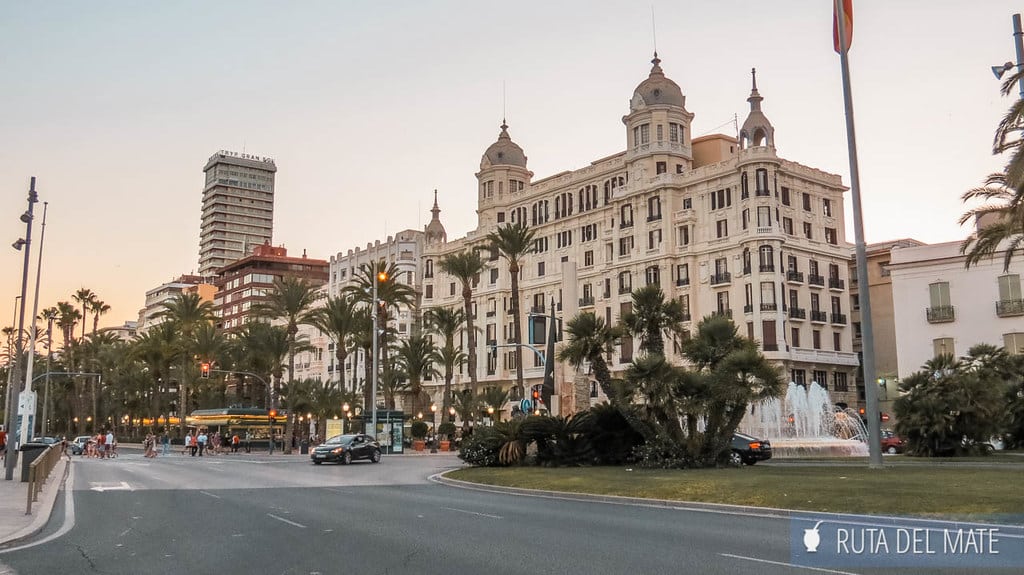
You can start the route at the Carbonell house, a former residential mansion and one of the most emblematic buildings of the city, built in the early 20th century in an avant-garde style. A few meters away awaits the City Hall with its square, a baroque construction of the 18th century with lots of large windows.
Continue the walk through the Co-cathedral of St. Nicholas of Bari built in the 17th century, also in baroque style and which highlights its beautiful blue dome on top. To finish the visit, just go to the old Central Market of Alicante, which is still functioning as such, with stalls selling vegetables, meats, sausages and much more.
📷 Discover Alicante on a guided bike tour. Amazing!
4. The beaches and the port of Alicante
One of the reasons why tourists visit Alicante is for its excellent blue flag beaches. There are many beaches in Alicante, from the most central and very crowded in high season, to small calas (coves). Below we will mention some of them:
– Postiguet Beach, the city beach
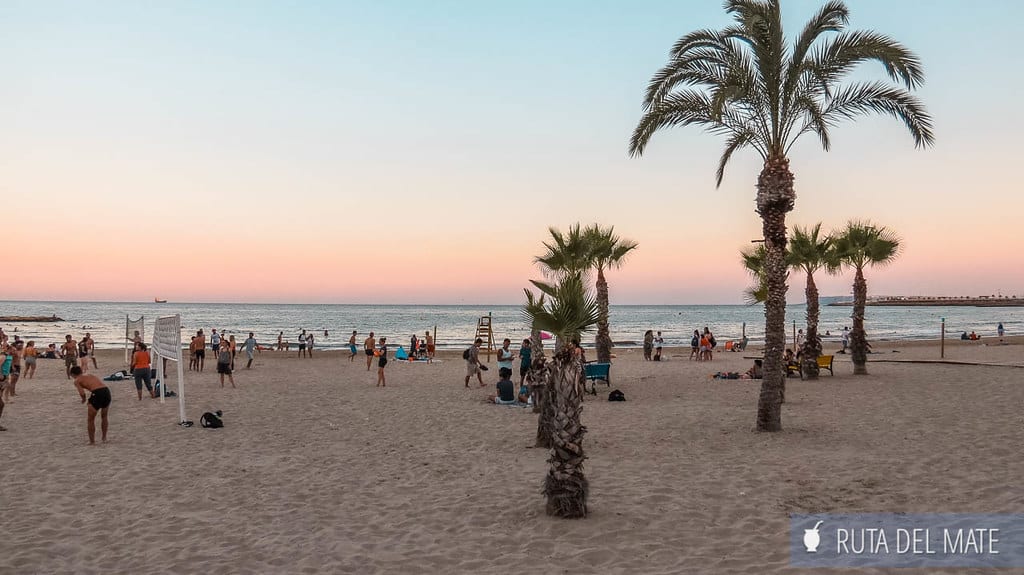
Playa del Postiguet is an urban beach and is located at the base of the Benacantil Mount and the Santa Barbara Castle. We frequented the northern end of this beach a lot since the apartment we rented was a 5 minute walk from there. In addition, it is well connected with public transport.
Although it is a sandy beach, many times on the shore often appear the ”arribazones”. These are the remains of a meadow of Posidonia Oceanica, ie, a field of plants that is submerged in the coast of Alicante. The leaves of this meadow is a symbol of good water quality. It is a refuge for many fish, crustaceans and mollusks that help the waves to be calm and protect the beach from losing its sand.
– San Juan Beach, more and more sand
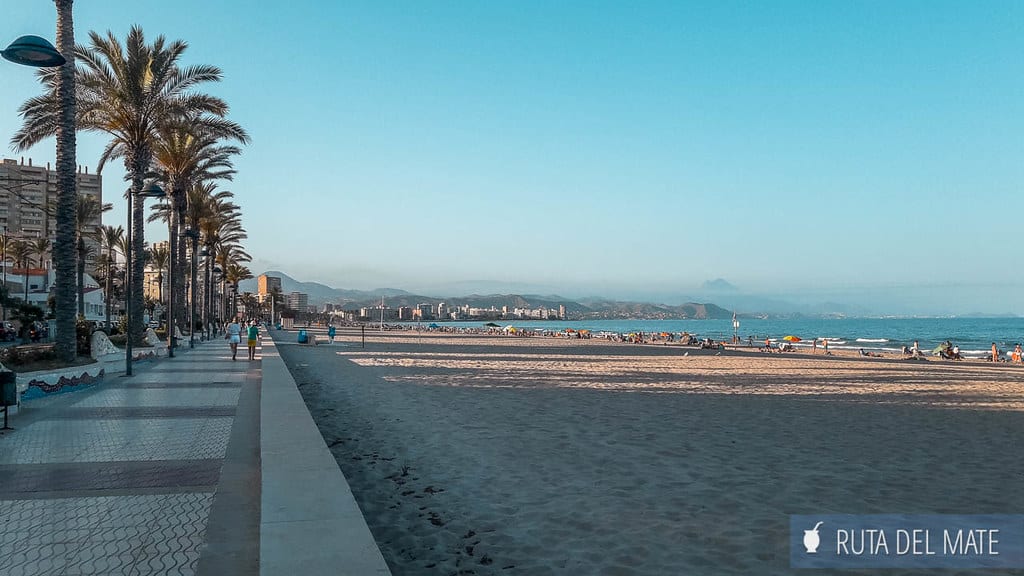
San Juan Beach is a paradise of more than 5 kilometers long (and 100 meters wide) with a beautiful palm-lined promenade. We found it to be very similar to Playa de Gandía, where we live.
It is a residential neighborhood that belongs to Alicante despite the 7 km away from it. Many choose to stay here instead of Alicante since it is quieter, although in summer it almost triples the amount of people there.
On this beach is where the Fiesta de San Juan takes place.
– Alicante’s coves to discover
Not to be forgotten are the small coves located a few kilometers from the city. They are an ideal place to relax and swim in the sea that feels like an open-air swimming pool. Some of the best coves are the Albufera and the Cabo de la Huerta coves.
– Port of Alicante, a walk with a nice view
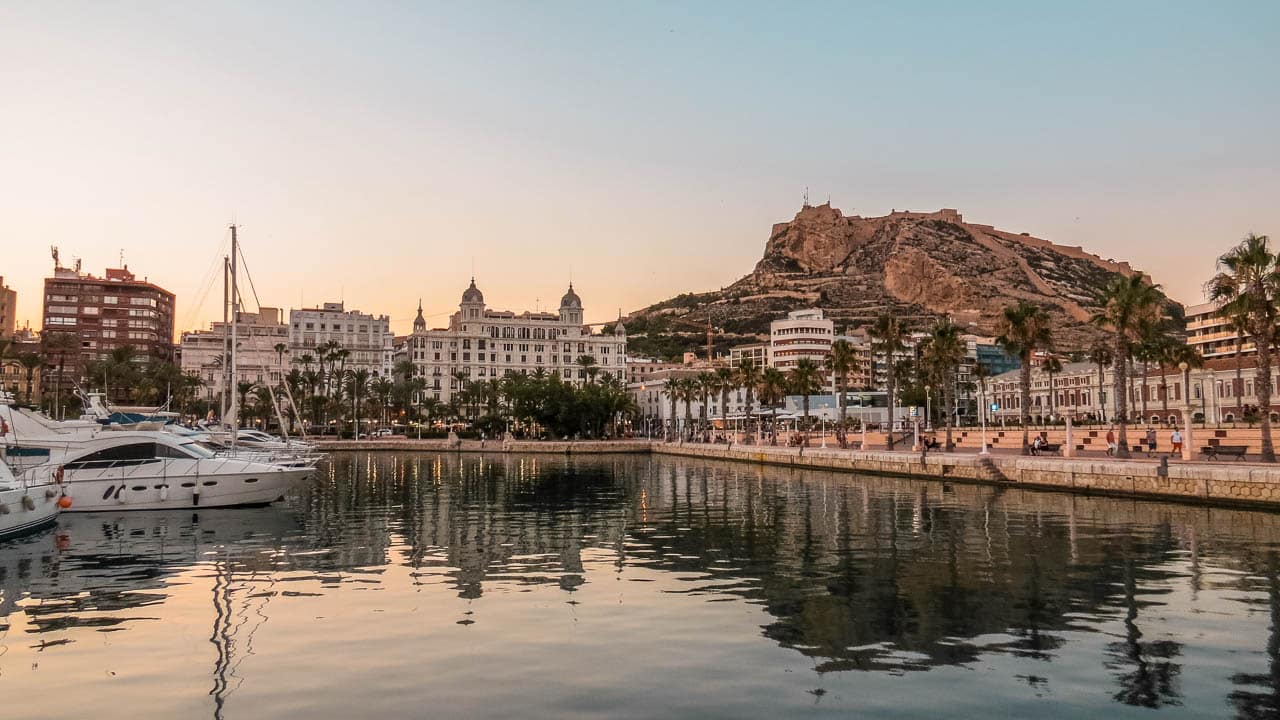
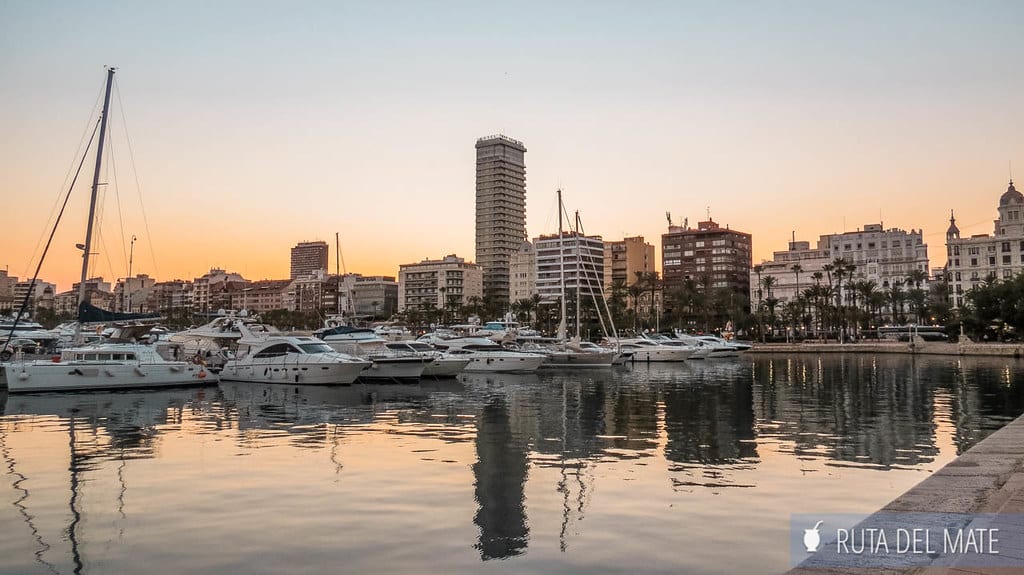
Another of the places to see in Alicante is its “marina“, protagonist of the city for its location, nightlife and importance. Strolling along the breakwaters you will see numerous yachts moored, sport boats and even many bars, restaurants, a casino and cinema complex. Everything has been designed so as not to get bored.
5. Esplanade of Spain, the most beautiful promenade to walk in Alicante
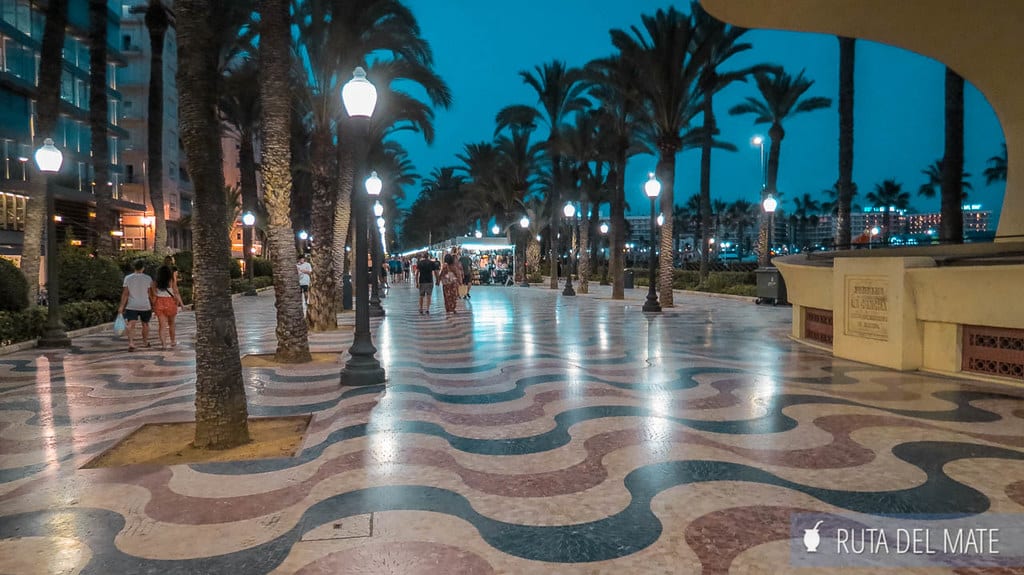
Something to do in Alicante is the walk along the Explanada de España (“Esplanade of Spain“). This route extends for about 500 meters from the emblematic building of the Carbonell house to the beginning of the Canalejas park.
The peculiarity of the promenade is that its floor has a mixture of red, blue and white colors that run as if imitating the shape of a moving wave. On the sides, a row of palm trees decorates the landscape in a very beautiful way.
The surroundings of the Explanada de España are just wonderful: the port on one side and restaurants and old traditional buildings on the other. During most of the year you can find street shows, street stalls and lots of locals and tourists coming and going.
6. Canalejas Park, the lung of the city
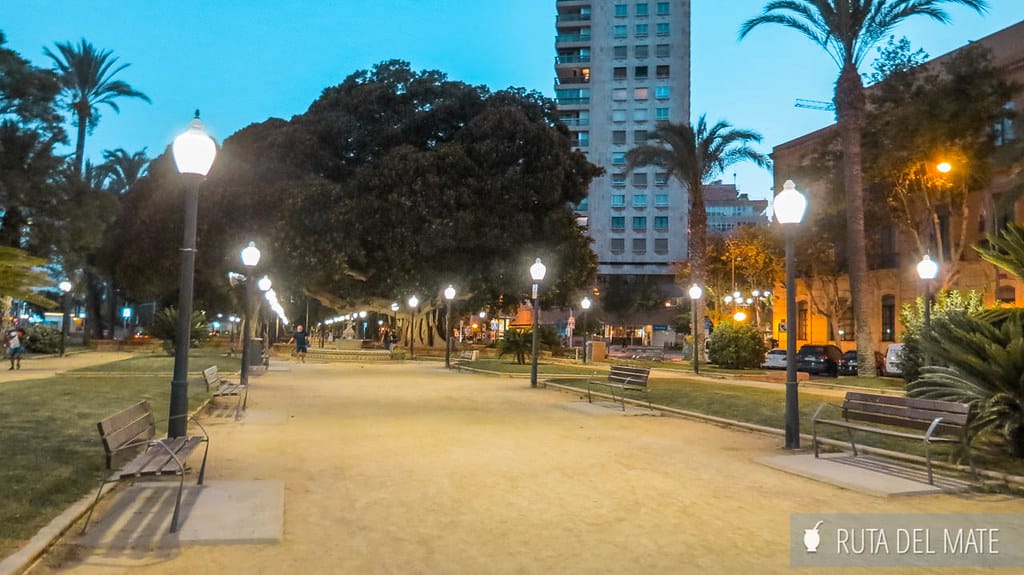
One of Alicante’s outdoor spaces for walking is Canalejas Park. It was named after the former Prime Minister of Spain who fought for the welfare and progress of the city.
The park is a continuation of the Explanada de España, following its route next to the port. Among its infrastructure, it has a children’s playground, gym equipment and plenty of shade, which is especially appreciated in the summer.
There are also restaurants on the side of the park, to enjoy a good Mediterranean meal while cooling off with the sea breeze.
7. Air Raid Shelters Interpretation Center
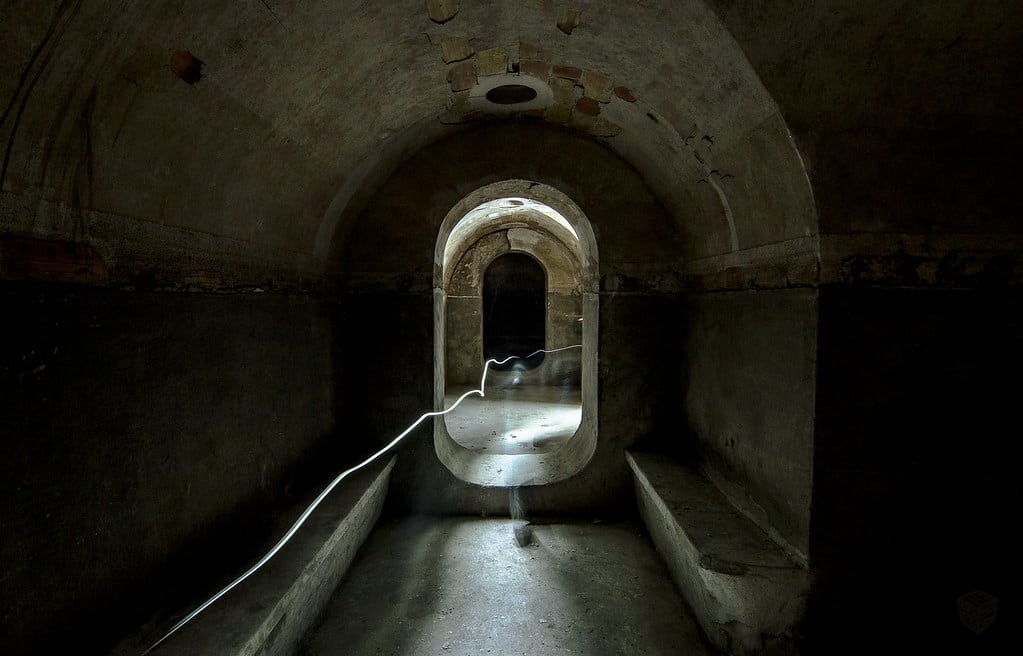
One of the interesting sights to see in Alicante are the air-raid shelters built during the Civil War to take refuge from bombing. Nowadays, it is possible to take guided tours and dive into the tunnels.
There are three possible routes to visit the shelters with a guide: Benalúa Sur and Santa Faz shelters and the Panteón de los Guijarro; visit to several shelters scattered around the city; Interpretation Centre and R31 Séneca and R46 Doctor Balmis shelters. The Seneca shelter is the largest, capable of housing more than 1,000 people and which had an audio system thanks to which the experiences of the people who took refuge in it can still be remembered today.
For more information about visiting hours and booking, please consult the official website of the Air Raid Shelter Interpretation Centre.
8. Museums and cultural centers to see in Alicante
There are many museums and cultural centers to visit in Alicante. One of the most important is the Provincial Archaeological Museum of Alicante which covers from the Paleolithic to modern times and has been developed with very visual and innovative material.
A visit to the Museum of Contemporary Art of Alicante (Maca) is worthwhile. On one hand, it is the oldest civil building in the city, and on the other, it houses a collection of 20th century art. The Gravina Fine Arts Museum also has its importance, with collections of provincial art ranging from the Middle Ages to the 20th century.
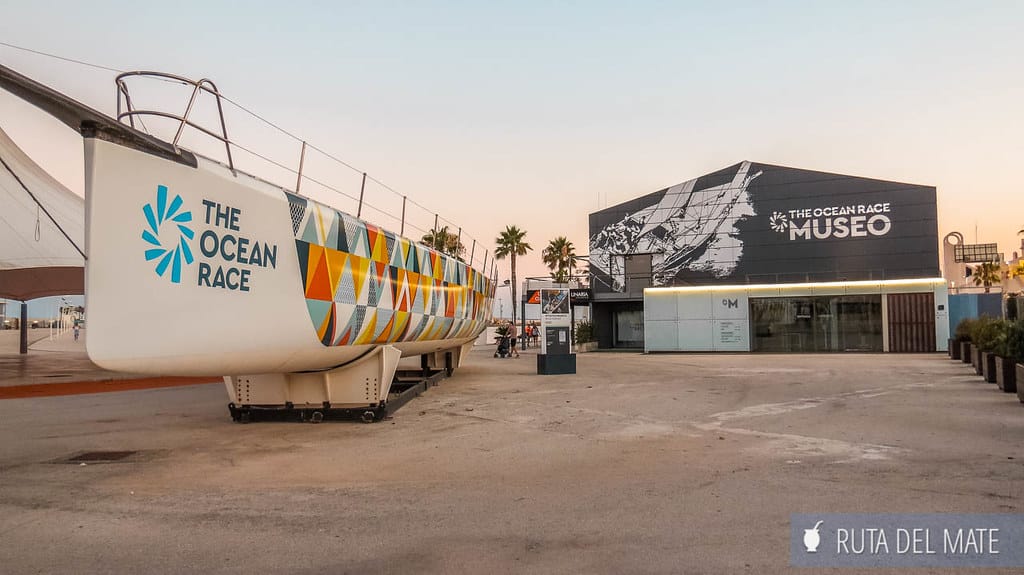
Finally, not to be excluded from the itinerary, is The Ocean Race Museum. It is located on one of the port’s breakwaters. With its modern style and lots of interaction, it is ideal for the whole family to learn more about life at sea. You will be amazed with all the history about the round-the-world sailing.
9. Visit Tabarca island
Tabarca Island is located off the coast of Alicante, an hour’s sail from its port. It is the only inhabited island in the Valencian Community.
It was a refuge of pirates and home to fishermen from Genoa in the past. Nowadays it stands out for the restaurants where you can taste the traditional caldero, the Church of San Pedro and San Pablo, its small historic center, the lighthouse and the island’s museum. It is also an ideal place to enjoy the excellent beach of crystalline water.
A perfect plan is to go and return in the day from Alicante. Although if you like to see a sunset and sleep on the island you can do it in one of the accommodations that are in Tabarca.
📷 Buy in advance the Tabarca Island Ferry from Alicante (it costs the same as buying it there)

10. The Bonfires of San Juan, a tradition that persists over time.
Alicante has an undeniable cult of fire in its history. Formerly, the tradition of lighting small bonfires was done in the agricultural area to ward off evils and celebrate the harvest.
This tradition, under the patronage of St. John the Baptist was passed on to the city and transmitted from generation to generation. Today has resulted in one of the most populous festivals in Spain. Schedule this celebration! Every June 20 to 24 you will enjoy the perfect combination of gunpowder, parades, fun and fire.
During the four days Alicante dresses up and many tourists come to live the tradition. One of the most important celebrations occurs on the night of June 24, when the beaches are crowded with people and small bonfires where they burn the wishes written on paper to attract good luck.

11. Around Alicante, villages with lots of charm
One of the best things to do in Alicante is to travel a few kilometres to marvel at the charming villages on the shores of the Mediterranean.
One of the jewels of the area that must be visited is Altea, a village bathed by the sea that is characterised by the narrow and steep streets of the historic centre that culminate in the parish church of Nuestra Señora Del Consuelo. It stands out for its viewpoints overlooking the Mediterranean and the mountains.
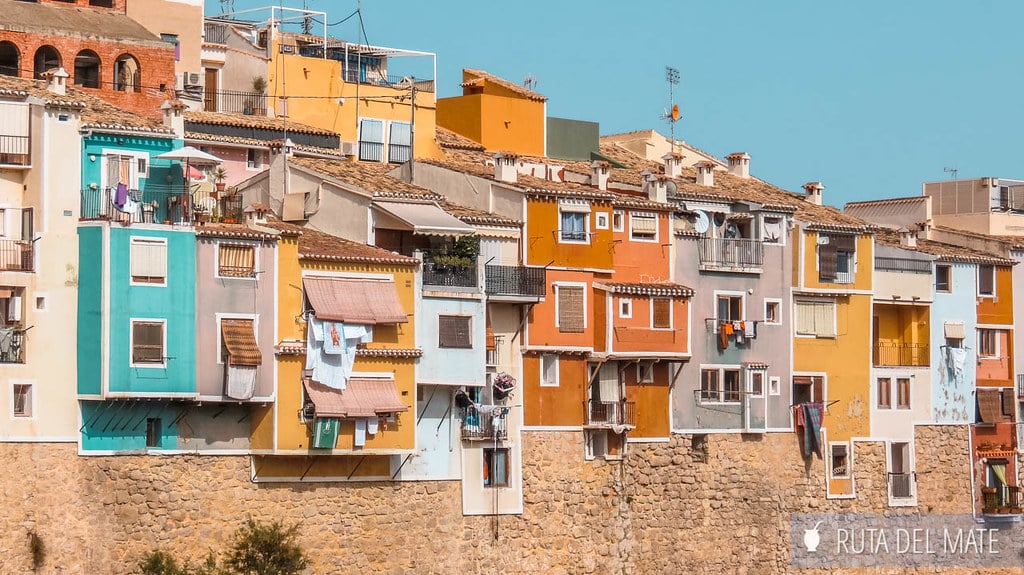
Even closer to Alicante, you can visit Villajoyosa, a colourful medieval fishing village with a beautiful beach.
If you want to combine a visit to both towns in the province of Alicante, we recommend you take the excursion that combines Altea with Villajoyosa and includes a visit to the Villajoyosa chocolate factory.
Calpe is another town worth a visit, especially for its beaches, coves and the great Ifach rock that marks its prominence on the coastline. A little further afield, Denia is a must to see its castle in the centre of the town and enjoy swimming on its beaches.
But there are more villages in the interior of the province of Alicante, with many villages nestled in the mountains. Such as Polop, Guadalest, Las Fuentes del Algar and Bocairent. If you want to see the best of these inland villages of the province, we recommend this tour of Altea, Guadalest and the Fuente del Algar from Alicante, which includes tickets to the castle of Guadalest and the fountains.
If you are looking for an itinerary to explore Alicante’s Costa Blanca, check out our article on things to do on the Costa Blanca, with suggested days and route.
Alicante with kids
Alicante is a city prepared for travelling with children and the vast majority of places to visit (either within the city or in the surrounding area) can be accessed with a pushchair, either because the route can be done on foot or by public transport.
The fact that it is a beach destination solves a lot of the boredom for the youngest members of the family, but it has many activities dedicated to children that they will love. For more information, see our article on visit Alicante with children.
Useful information to visit Alicante in 2 days or more
– Getting to Alicante
Alicante has an airport that is located a few kilometers from the city center and connects with other Spanish and European cities. Many low cost airlines fly to Alicante.
To get from Alicante airport to the city centre you can take the bus line C6, or hire a transfer from Alicante airport to the hotel.
The second option to get to Alicante is by bus if you are coming from Spain, especially if you are coming from Valencia, Castilla La Mancha, Murcia or Andalusia. The bus station is located next to the port of the city, very close to the center.
Finally, you can reach Alicante by train. The train station is one of the oldest in Spain and is located in the center of the city. There are high speed trains (AVE) that connect the city with Madrid in two hours. Regional trains go to Murcia, Valencia and as far as Barcelona.
What you need for your trips to the Valencian Community
Plan your journey easily with these trusted resources: