
Essential Guide to Visit the Fallas of Valencia
We leave you a guide to visit the Fallas of Valencia, with all the necessary information to enjoy and live the fallas without missing anything.
If you plan to visit Valencia, a good time to go is during the Fallas, the biggest traditional festival celebrated in the Valencian Community during the first half of March. Such is their importance that they were named Intangible Cultural Heritage of Humanity by Unesco in 2016.
1. When are the Fallas of Valencia?
The Fallas of Valencia are celebrated during the first half of March. Every day since March 1, depending on the agenda, different events, tributes, parades of falleras and musical bands and fireworks are held. In addition, the public can enjoy the various street food stalls that abound in the streets.
2. What are the “Fallas”? What are the “Ninots”?
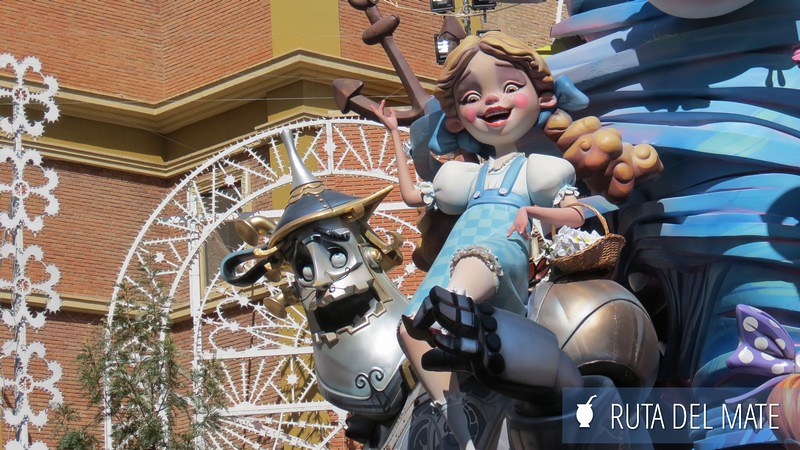
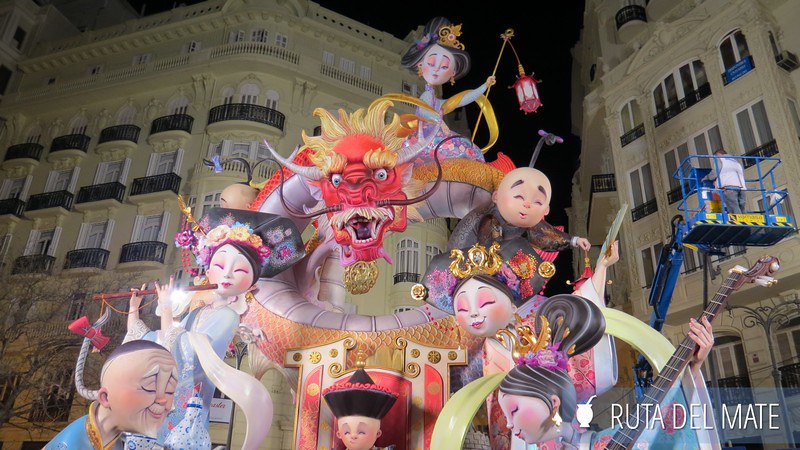
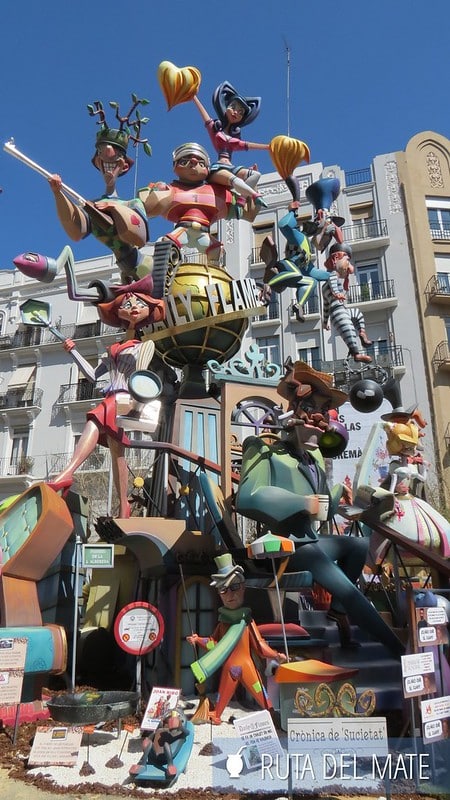
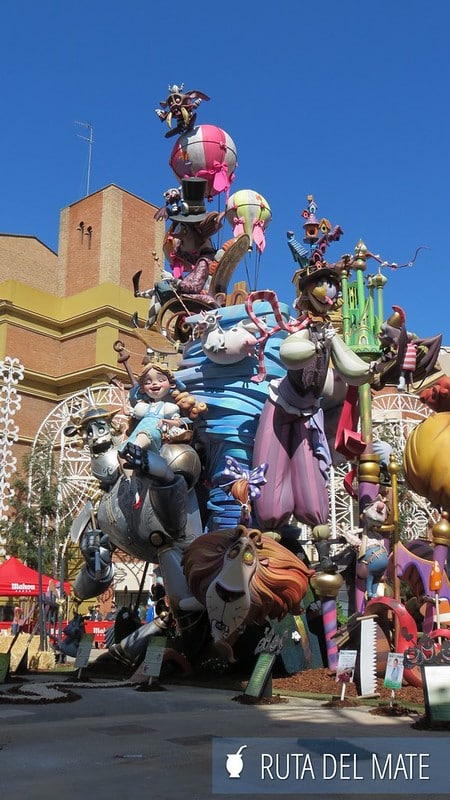
Fallas is the name given to the festivities in general and to each one of the monuments or sculptures that the groups or commissions of fallero artisans put together. The art of creating these faults is a heritage that is passed down from generation to generation of the family.
The sculptures are made of combustible materials such as cardboard, wood, paper or white cork so that they can be completely burned once the party is over. Their construction is usually financed by a brand, especially the best known or historically awarded ones, which usually cost more than 100,000 euros (an amount that has decreased drastically with the crisis) and take a few months to be designed and built. Approximately 800 fallas can be set up throughout the Valencian Community. There are different sections and the most visited, large and expensive are those of the Special Section, which are worth a tour.
📝 To build an itinerary, google “fallas Valencia maps” and you will see several pages that offer interactive maps with all the fallas planted. To choose which ones to visit and which ones not to visit, you have to take into account the winning fallas of the previous year in the Special Section and that’s it: at least those are the ones you can’t miss.
Each sculpture is composed of dolls or sculptures called “ninots”. It can be said, from what we have observed, that each fallera exhibition is composed of:
- The main Falla, which is the one that stands out in height and has the largest “ninots”.
- The children’s Falla, which is exhibited and evaluated separately from the main fault, and is smaller.
- The “ninots” that are at the foot of the main falla that have to do with current political and social events (we have seen ninots of Rajoy, Trump, local characters, soccer players, etc., see below).
Each Falla has a motto and is full of posters with satirical and funny phrases (we understood the idea of what they meant but not the details because they are in Valencian).
La “Plantà”
The plantà is when the fallas are assembled or mounted. Due to the complexity of these sculptures, you can start a few days earlier but:
- At 8 o’clock in the morning of Wednesday 15/3 the Fallas Infantiles must be ready.
- At 8:00 a.m. on Thursday 16/3 the main Fallas must be ready.
During each of these days the winning fallas in each category and section are announced. The only falla that does not enter the contest is the one made by the Valencia City Council.
Each fault is enclosed by a fence. From this perimeter you can observe the monuments very well. There are some of them to which you can enter to see the details more closely for free, for a donation or a fixed fee, depending on the popularity of the fault.
Winning Falla for its lighting of lights
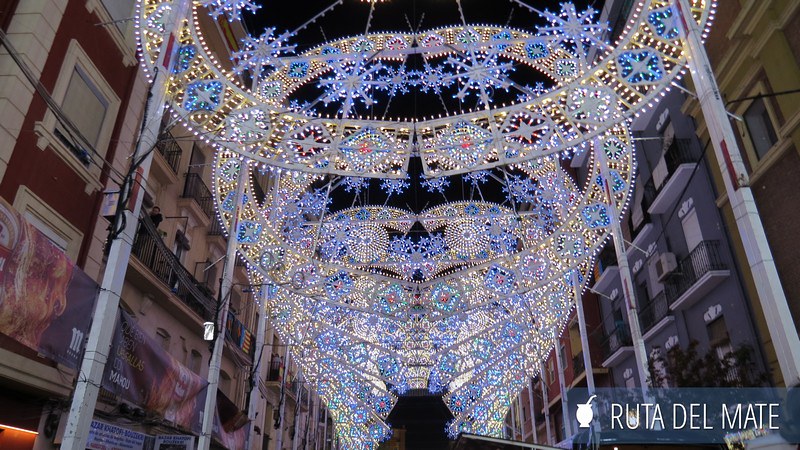
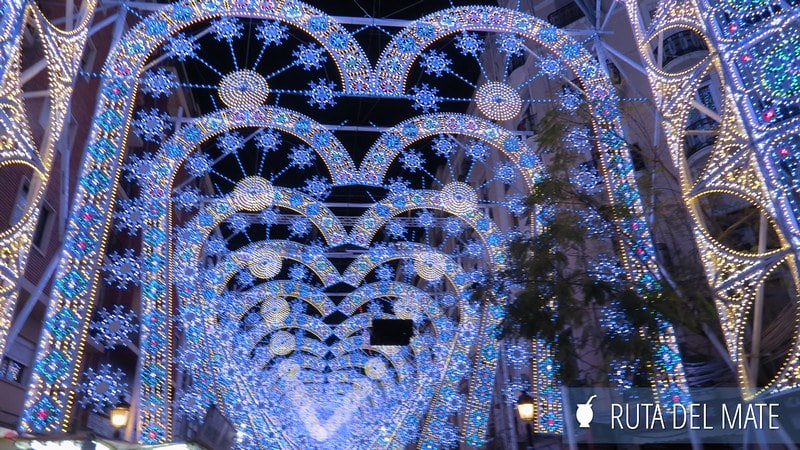
In the evening, on advice and in the company of Sole and Pablo, Juan’s friends, we went to see the Cuba-Literat Azorín falla, which won this year for its lighting of lights and in turn this falla came in fourth place in the Special Section.
The lighting of the street lights starts at 8 p.m. and it is a spectacle of lights that turn on, turn off and change color following a background music.
The Falla of the town hall
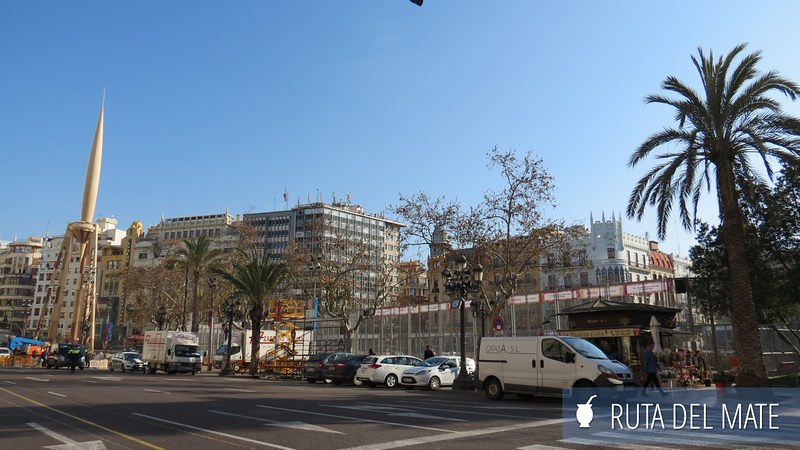
This falla is planted in the Town Hall square, and of course, its theme varies from year to year. It is the last falla to be burnt and one of the largest in the city of Valencia.
4. Pyrotechnic games in the Fallas
Since the beginning of March we have started hearing firecrackers and explosions everywhere. We live in front of a square surrounded by buildings and the noise is terrible. As the official date for the start of the Fallas was approaching, you have to walk down the street with care because there may be a surprise noise about to torment you.
There are specific companies dedicated to this. This year the protagonists were the Caballer Brothers, who have prepared the most important fireworks: the last “mascletà”, the “Nit del Foc” and the “cremà” of the Falla Town Hall.
Here we talk more about pyrotechnic games than about fireworks because the sound is more important than the visual.. In the Fallas program, the “games” or “fires” that you cannot miss are:
The “mascletà”
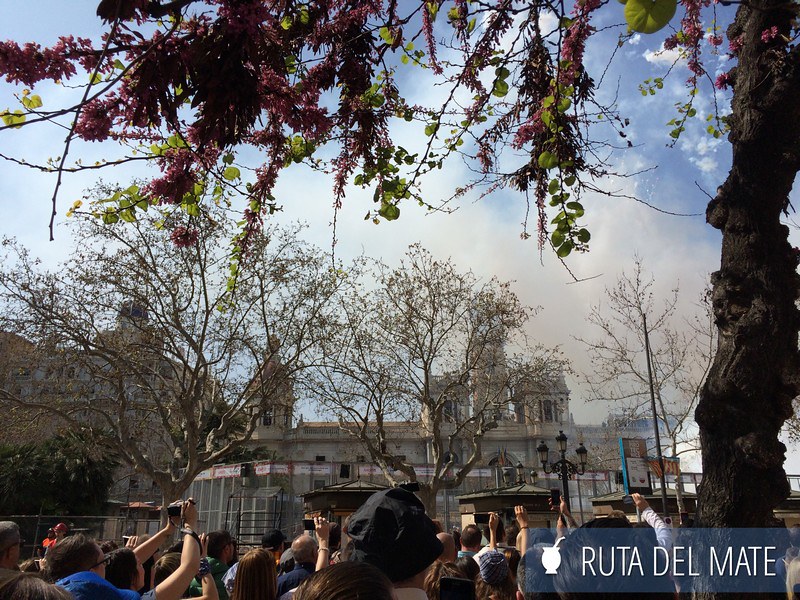
It is a pyrotechnics festival that takes place at midday (14 hours on time) in the Plaza del Ayuntamiento in Valencia from the 1st to the 19th of March, rain permitting. The most important thing here is the noise they produce, starting from something a little “quieter” to the roars at the end which can exceed 120 decibels.
Every day, the company in charge of the mascletá changes. We advise you to go in advance to find a good place to see them, at least one hour before. In case you want to see the mascletà on a weekend, we advise you to go at least two hours before. Many people bring benches to sit on (an idea). It usually lasts between 5 and 7 minutes.
“L’alba de les falles”
They are fireworks that are thrown at 12 pm on March 15 in the Plaza del Ayuntamiento, as if welcoming the first official night of the fallas. We didn’t know it was being done, we saw it by chance on our way back to the hotel after dinner. It lasted about 5 minutes.
Gran Nit del Foc
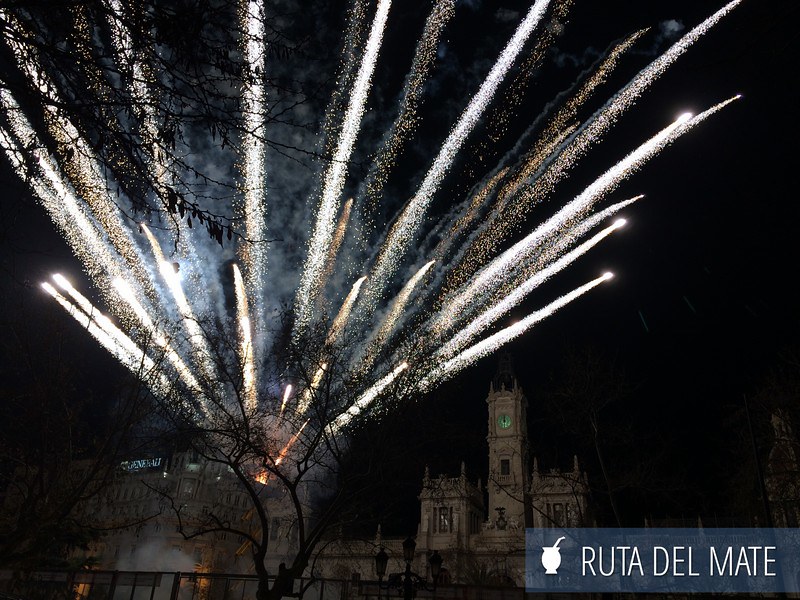
It is a fireworks display that takes place in the Paseo de la Alameda. It is done the last Saturday before the end of the fallas at 1:30 in the morning and being at night is a spectacle of lights and noise. Around 1,200 kilos of pyrotechnic material were fired, not for nothing lasts about 20 minutes.
5. Parades of falleros, falleras and musical bands
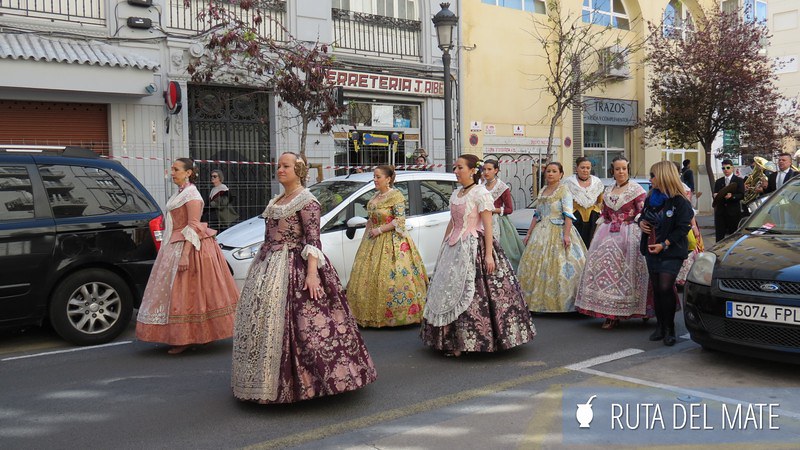
If you are walking through the streets of Valencia and suddenly you hear live music, it means that a Fallas parade is coming. Men, women and children dressed in their traditional costumes and hairstyles. The orchestra follows them from behind.
The election of the falleras mayores
In Valencia, there are 26 sections made up of various commissions. Each commission presents a candidate for fallera mayor and fallera mayor child within its section, which will make a pre-selection of them, presenting 3 candidates.
Then they parade in front of a jury who, by voting, choose in October of the previous year who will represent Valencia and will be, thus, the queen of the festival. Its functions are more social and promotional of the following year’s Fallas.
6. The offering of flowers to the Virgen de los Desamparados
The Virgen de los Desamparados is the patron saint of Valencia. The offering consists of a parade of falleros and falleras with a bouquet of white and red carnations from the falla to which they belong to the Plaza de la Virgen in Valencia. Upon reaching the square, each bouquet ends up in a wooden structure that simulates the figure of the Virgin and thus gives shape to her mantle.
This procession usually begins on Friday, March 17 and ends on the evening of March 18.
7. The “cremá”, the end of Fallas
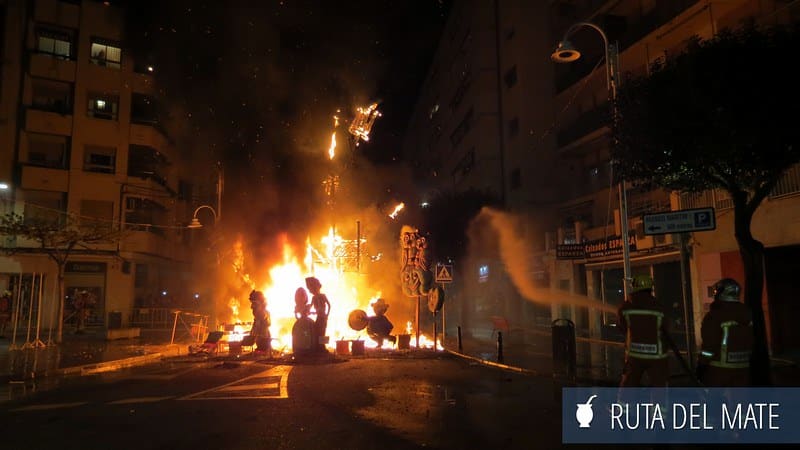
The “cremá” is the last act of the fallera week, where all the sculptures are set on fire. This is an act organized and coordinated by the firefighters who have to be present at the moment of the burning, controlling the fire. This show takes place on the last day of the fallas, which is March 19, in the evening.
Cremà of the children’s fallas
In this case, it was held at 9:00 pm. You have to check the schedule because as it is with the fire department control, not all of them are held at the same time.
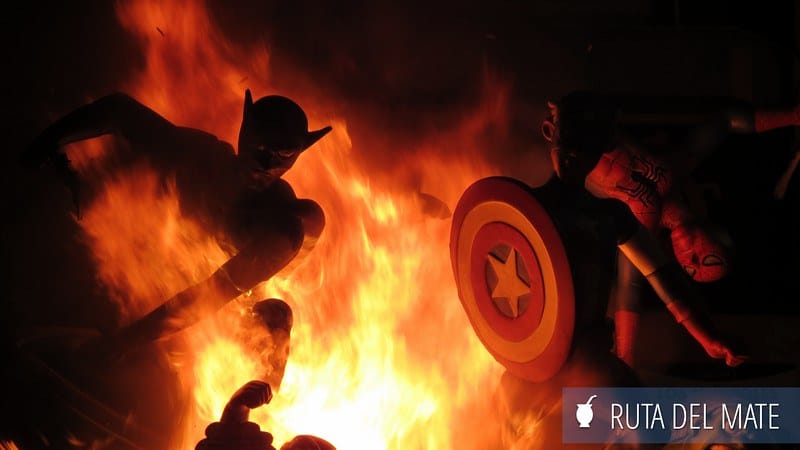
Cremà of the main fallas
It was held at 11:00 p.m. You have to check the schedule because as it is with the fire department control, not all of them are held at the same time.
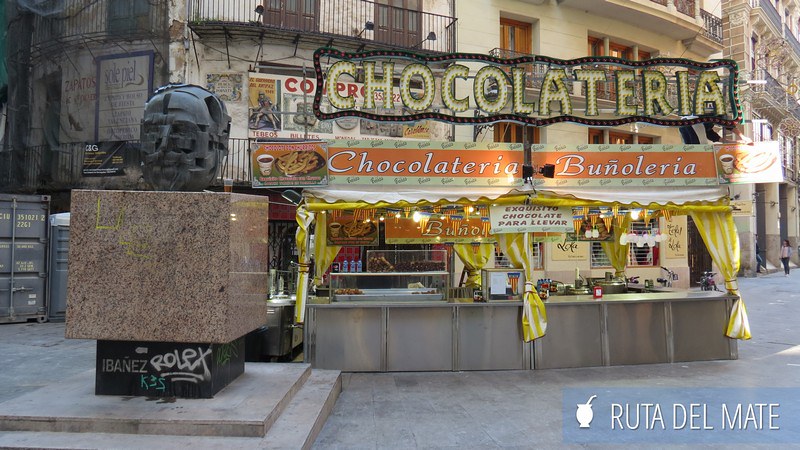
And finally, whatever day you go, be sure to eat some fritters with chocolate in the street stalls that you will cross on the street. The rich smell will not leave you indifferent.
Useful information to visit the Fallas of Valencia
Summary: Things to do in the Fallas of Valencia
After so much explanation, a good summary of what to see in the Fallas of Valencia during the Fallas Week:
- Mascletà: every day at 2 p.m. at the Town Hall Square.
- Plantà de las Fallas: from Wednesday of the Semana Fallera until Sunday all the sculptures are available to be visited.
- Ofrenda a la Virgen: Thursday and Friday of the Fallera Week.
- Nit del Foc: Saturday at 1:30 a.m. (Sunday at dawn) at Paseo de la Alameda.
- Cremà: Sunday evenings.
📷 If you want the tranquility of touring Valencia on a tour, we recommend the following: Guided tour of the City of Arts and Sciences, Guided tour of Valencia and the Lonja de la Seda
Where to stay in Valencia to visit the Fallas?
If you are going to Valencia for the fallas, the first advice we give is to book well in advance, especially if the intention is to go on the weekend.
The second tip is to choose a hotel with a good location from which to get around to see most of the fallas and events in the city. Therefore, in our experience, we believe that the best place is in the historic center of Valencia.
Our recommendations for accommodation in Valencia are:
- Hotel Mediterraneo: modern facilities, buffet breakfast and close to all the attractions to see in Valencia.
- The River Hostel: excellent location next to the Turia Garden and close to the Cathedral. Well decorated, with an excellent youthful atmosphere and shared and private rooms all with shared bathroom.
- Vincci Lys: four stars with spacious common areas where fine decoration and stylish furniture take centre stage. Very comfortable rooms and a buffet breakfast for the most demanding guests. Ideal for couples.
💯If you want more options, check out our article with recommendations of where to stay in Valencia.
How to get to Valencia to visit the Fallas?
- Valencia airport has direct flights to various destinations in Europe, with many of the low cost airlines operating. From the airport you can take metro line 3 or 5 to get to the city centre, or hire a transfer from the airport to the hotel.
- You can also get there by bus from different parts of Spain and by high-speed train from Madrid with the companies Renfe, Ouigo and Yrio. From Barcelona it is also possible to get to Valencia by train. Check bus and train timetables, and book here.
Whichever means of transport you choose, try to book in advance. We went from Wednesday to Thursday and it was already too crowded.
And if there are a few of you and it is worth taking your own car, or renting one, bear in mind that the Fallas are set up in the street and many of them may be closed to the public. The official government websites provide information on this point, but you can also leave your car on the outskirts of the city and access the city centre by train or metro.
What you need for your trips to the Valencian Community
Plan your journey easily with these trusted resources: